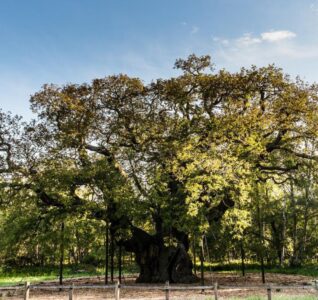
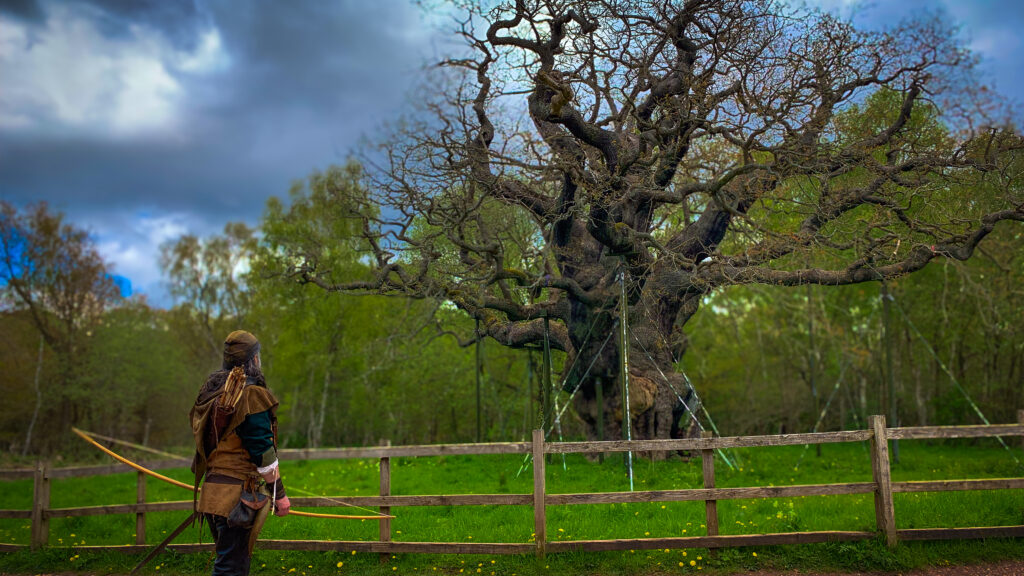
The team at Visit Nottinghamshire is saddened to learn of the passing of the Major Oak, the ancient tree at the heart of Sherwood Forest that has inspired generations of visitors and become one of the most recognisable symbols of Nottinghamshire around the world.
Today, the Royal Society for the Protection of Birds (RSPB), which manages Sherwood Forest, announced that the Major Oak is believed to have reached the end of its remarkable life after failing to come into leaf this spring. Estimated to be between 800 and 1,200 years old, the tree has stood as a silent witness to centuries of history, folklore and change.
Having taken root long before modern Britain existed, the Major Oak has stood witness as our country has evolved through the centuries. It was already a mature tree when the Norman Conquest reshaped England in 1066, and lived through the reigns of Plantagenet, Tudor and Stuart monarchs, the English Civil War, the Industrial Revolution, the rise of Nottinghamshire’s coalfields, two World Wars and the dawn of the modern age. Throughout it all, the ancient oak remained a constant presence in the heart of Sherwood Forest, connecting generations through its enduring story.
The tree’s association with Robin Hood helped cement its place in folklore, with legend claiming the outlaw and his Merry Men sheltered within its vast hollow trunk while evading the Sheriff of Nottingham. Although known by several names over the centuries, including Robin Hood’s Oak and the Cockpen Tree, it became known as the Major Oak after local antiquarian Major Hayman Rooke documented the remarkable tree in his 1790 publication. His writings introduced the oak to a wider audience and helped establish Sherwood Forest as a destination for visitors from across Britain and beyond.
For countless visitors, a trip to Sherwood Forest has never been complete without gazing upon the sprawling canopy of the Major Oak. For more than 230 years, travellers have journeyed to see this extraordinary natural wonder, making it not only Nottinghamshire’s most famous tree, but one of Britain’s most treasured landmarks. Its vast branches, distinctive hollow trunk and enduring presence have inspired stories, artworks, photographs and memories that span generations.
While dedicated conservationists at RSPB worked tirelessly to protect the tree, experts believe a combination of factors contributed to its decline, including historic structural interventions designed to preserve its form and the increasing pressures of climate change, drought and extreme temperatures.
Although the Major Oak may no longer be living, its story is far from over. The tree will remain standing within Sherwood Forest as a natural monument and an invaluable habitat for wildlife. As it slowly becomes part of the forest ecosystem in a new way, it will continue to support countless species and play an important role in the landscape it has dominated for centuries.
Its legacy will also live on through the many saplings propagated from the Major Oak and planted across the UK and around the world, ensuring that future generations can maintain a connection to this extraordinary piece of Nottinghamshire’s natural heritage.
The lessons learned from caring for the Major Oak are already helping conservationists better understand and protect ancient trees across Britain. In that way, the tree’s contribution extends beyond folklore and history, helping to safeguard the future of some of our nation’s most important natural treasures.
The loss of the Major Oak marks the end of an era for Sherwood Forest, but not the end of its story. As one of Britain’s most treasured trees and a global symbol of Nottinghamshire, its influence will continue to be felt for generations to come.
Some legends never truly fade.
Posted on 18 June 2026